
South Africa’s Presidency has sought to calm mounting political and regulatory tensions around recent changes proposed in the telecommunications sector, insisting that the law will not be subverted following a controversial directive issued by Communications Minister Solly Malatsi. President Cyril Ramaphosa’s office stressed that any reforms to the sector must remain firmly within the framework of existing legislation.
The controversy follows Malatsi’s instruction to the Independent Communications Authority of South Africa (Icasa) to urgently consider aligning its regulations on equity ownership and control by historically disadvantaged groups (HDGs) with the amended Broad-Based Black Economic Empowerment (B-BBEE) ICT sector code. The move, first reported by Business Day, came after the Department of Communications gazetted a policy directive in May outlining the role of equity equivalent investment programmes (EEIPs) as a mechanism to accelerate broadband access. Critics argue that this could allow companies such as Elon Musk’s Starlink to enter the South African market under alternative empowerment arrangements.
The decision has sparked sharp criticism across the political spectrum, including from within the governing African National Congress (ANC). The party has warned that the directive exceeds the minister’s legislative authority, undermines South Africa’s transformation agenda, and threatens the integrity of the ICT and postal regulatory environment. Malatsi has also publicly clashed with his deputy minister, Mondli Gungubele, who described the directive as an affront to the country’s aspirations for sovereignty, self-reliance, and security.
The ANC accused ministers affiliated with the Democratic Alliance (DA) of attempting to bypass Parliament by using policy directives to effect legal changes. ANC spokesperson Mahlengi Bhengu said no minister has the power to amend or suspend legislation through a directive, stressing that laws such as the Electronic Communications Act, the Icasa Act, the Postal Services Act, and the B-BBEE Act can only be amended by Parliament following public consultation. She warned that proposed exemptions to the 30% HDG ownership requirement could allow foreign operators to sidestep transformation obligations, potentially reversing decades of progress toward inclusion, localisation, and equitable ownership in the ICT sector.
Despite the backlash, the Presidency has defended the process while drawing a firm line against any unlawful actions. Presidential spokesperson Vincent Magwenya said the focus should not be solely on Starlink, noting that several companies could benefit from the directive. He maintained that Malatsi’s actions fall within the bounds of the law and are aimed at accelerating broadband expansion, while reaffirming that the president would not endorse any attempt to undermine legislation.
Magwenya added that President Ramaphosa has been clear in his engagements with stakeholders that all actions must comply with existing laws. If Icasa finds that it cannot act beyond what current legislation allows, the government would pursue formal legislative amendments through established parliamentary processes. “We will not subvert the law,” Magwenya said, underscoring that any changes must be properly guided by South Africa’s constitutional and statutory framework.
Presidency Says Law Will Not Be Undermined Amid Telecoms Regulatory Dispute
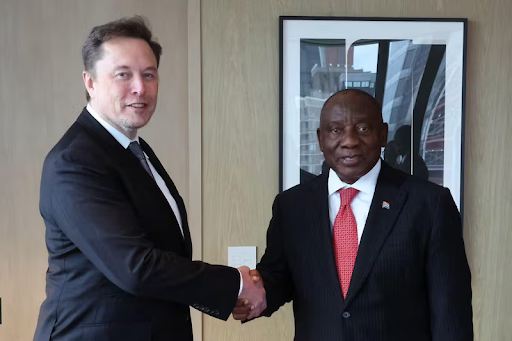
Picture Credit: SA Government/X
11
previous post