
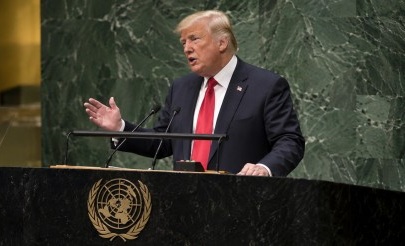
In a speech at the United Nations General Assembly in New York, U.S. President Donald Trump proposed renaming artificial intelligence as “super intelligence” in official government documents, arguing that the term “artificial” undersells the technology’s capabilities. Trump’s remarks come amid ongoing debates among governments and tech companies about managing the rapid advancements in AI systems.
Trump rejected calls for international regulations on artificial intelligence, dismissing concerns about AI’s potential dangers as exaggerated. He asserted that the technology could have a more significant economic impact than previous technological revolutions, emphasizing the importance of continued development in the field.
In contrast to Trump’s stance, over 20 political leaders have advocated for stronger global cooperation, safety testing, and standardization of AI systems. Despite this, Trump made it clear that the United States would not support the establishment of a global system to control AI technology.
Additionally, Trump floated the idea of creating an “AI Force” and appointing an AI czar to oversee developments in the United States. However, details on how this proposed structure would function remain limited at this time.
The term “superintelligence” already holds a specific meaning within AI research, typically referring to a hypothetical system with intellectual capabilities far surpassing those of humans. Trump’s proposal would broaden the application of this term to encompass all forms of artificial intelligence.