
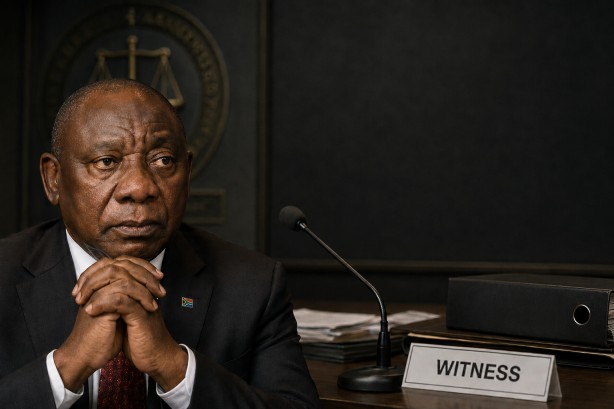
During the proceedings of the Madlanga Commission, Vusimuzi “Cat” Matlala’s testimony unexpectedly brought up South African President Cyril Ramaphosa’s name. The commission is delving into claims of confidential information being exchanged between Matlala and senior figures in the police force. Central to the testimony was a document containing personal details that were said to be connected to President Ramaphosa. This document was reportedly sent by Matlala to former KwaZulu-Natal Hawks head, Major-General Lesetja Senona, after it was initially received from a private investigator named Calvin Rafadi.
Matlala, however, maintained that he merely acted as a conduit for the information, stating that he was unaware of the document’s contents or its original source. Crucially, Matlala’s statements did not suggest any misconduct on the part of President Ramaphosa. The inquiry also turned its attention to the nature of Matlala’s association with Senona, whom he referred to as an “older brother.” Matlala disclosed that Senona had provided him with a loan of R20,000 following a police raid on his property in Pretoria back in December 2024.
Further into his testimony, Matlala leveled accusations at the suspended Deputy National Police Commissioner, Lieutenant-General Shadrack Sibiya. He alleged that Sergeant Fannie Nkosi played the role of a go-between in allegedly gathering funds from individuals within Gauteng. Nonetheless, Matlala refrained from naming these individuals, citing his right against self-incrimination due to ongoing separate criminal proceedings against him.
The Madlanga Commission is rigorously investigating claims of corruption, criminal conduct, and political meddling within South Africa’s justice system. As these hearings continue, the testimonies and revelations, such as those from Matlala, contribute to the broader understanding of the complex dynamics and alleged malpractices within the system. The unfolding inquiry underscores the challenges and controversies surrounding the nation’s law enforcement and political structures.