
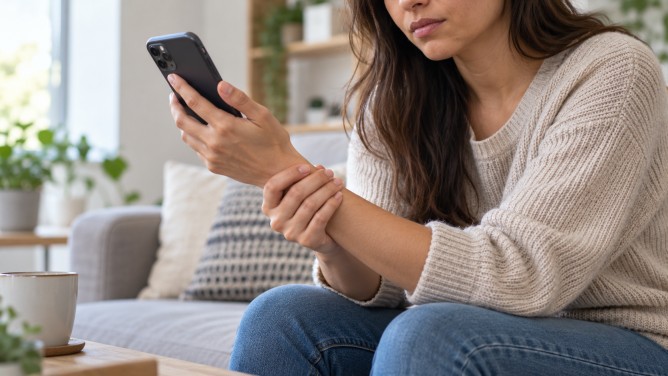
Excessive smartphone use can lead to strain and discomfort in the hands and wrists, a growing concern as these devices become integral to daily life. Repeated stress from prolonged use without breaks often affects the thumbs, fingers, wrists, and surrounding muscles, with the risk varying based on usage frequency, grip, and break intervals.
Frequent thumb movements, such as scrolling and typing, can irritate tendons and surrounding tissues, potentially causing soreness, stiffness, and discomfort, particularly for those with pre-existing hand or joint issues. Alternating typing methods and taking short breaks can mitigate repetitive strain.
Moreover, holding a smartphone in one hand can place undue pressure on the wrist and fingers, especially if the grip is too tight or the wrist is bent awkwardly. This can lead to muscle fatigue, compounded by other activities like computer use or gaming. Regularly changing positions and avoiding awkward postures can help reduce stress on the hands.
Early warning signs of strain include tired fingers, mild soreness, or wrist stiffness after extended use. More severe symptoms, such as persistent pain, swelling, tingling, numbness, or reduced grip strength, should not be ignored, as they may indicate tendon, joint, or nerve issues requiring professional assessment.
To protect hands and wrists, practical adjustments can be made: using both hands for typing, taking regular breaks, maintaining a comfortable wrist position, loosening the grip on the device, utilizing voice typing, frequently changing positions, and reducing unnecessary screen time. While these habits can alleviate some strain, they do not guarantee injury prevention.
If discomfort persists despite these changes, seeking medical advice is advisable. Persistent numbness, tingling, swelling, weakness, or difficulty gripping objects may necessitate a professional evaluation to determine the underlying cause and appropriate treatment. Thoughtful smartphone use, regular breaks, and early symptom response are key to maintaining healthier hand and wrist function.