
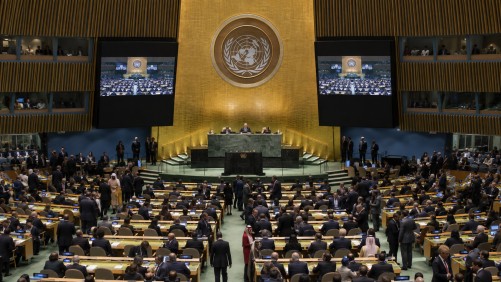
As world leaders converge in New York for the United Nations General Assembly, discussions are expected to center on pressing global issues such as the conflicts in the Middle East and Ukraine, advancements in artificial intelligence, and the pressures on the international system. Nearly 130 heads of state and government are participating, with significant attention on the diplomatic engagements of U.S. President Donald Trump.
President Trump is scheduled to deliver a key address at the assembly and engage in bilateral meetings with Ukrainian President Volodymyr Zelenskyy, British Prime Minister Andy Burnham, and Japanese Prime Minister Sanae Takaichi. The ongoing Russia-Ukraine conflict is a major focus, with French President Emmanuel Macron having already discussed with Trump proposals for a temporary halt to attacks on energy infrastructure in Ukraine. Macron emphasized the importance of reinforcing Ukraine’s defensive capabilities and plans to discuss this further with Zelenskyy.
The Gaza conflict is another critical topic on the agenda, with efforts toward a two-state solution anticipated to be a central theme. Irish Prime Minister Micheál Martin will join discussions aimed at supporting a permanent ceasefire and advancing a two-state solution, reflecting the international community’s continued interest in resolving this long-standing issue.
Iran’s participation is marked by a diplomatic delegation led by Foreign Minister Abbas Araghchi, who aims to present Iran’s positions and defend its national interests. While U.S. Secretary of State Marco Rubio has stated that Washington is open to discussions with the Iranian delegation, no formal meeting has been scheduled. Rubio reiterated that preventing Iran from acquiring a nuclear weapon remains a primary U.S. objective, underscoring the ongoing tensions between the two nations.