
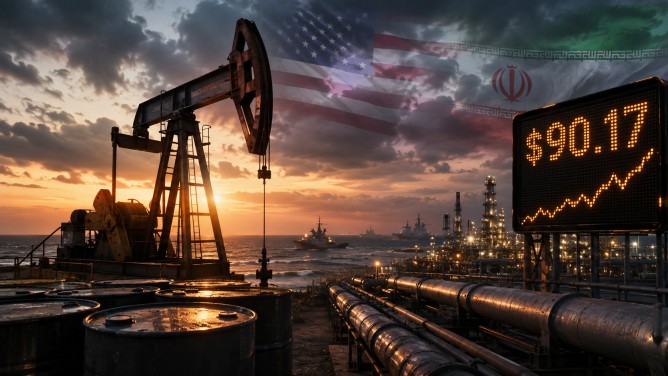
Oil prices have surged significantly as the negotiation window between the United States and Iran closed without a peace deal, sparking fears of ongoing conflict and potential disruptions to global energy supplies. Brent crude has climbed above the $90 per barrel mark, reaching approximately $91.63, marking its highest point since late July. This rise follows US President Donald Trump’s demand for Iran to surrender, coupled with a warning that the situation could escalate should diplomatic efforts falter.
The Strait of Hormuz, a key global oil shipping lane, has become a focal point of concern. There has been a noticeable decline in the number of commercial vessels navigating through the strait, amplifying worries about sustained disruptions to oil supplies. The geopolitical tensions have been exacerbated by reports of an attack on a cargo vessel in the region, further intensifying fears over the security of shipping routes.
Iran has hinted at potentially adopting a more aggressive military posture if negotiations remain unsuccessful. The heightened tensions have led investors to brace for a potentially extended interruption in oil supply, with any prolonged closure or reduced activity in the Strait of Hormuz likely to exert additional upward pressure on crude oil prices.
Analysts caution that the ongoing conflict in the Middle East, coupled with the war in Ukraine, could deliver additional shocks to global energy markets. Such developments may contribute to an increase in oil and gas prices, compounding economic pressures worldwide.