
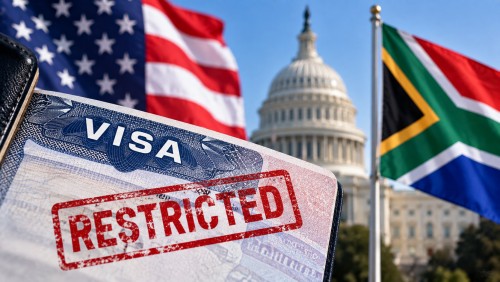
The United States has implemented new visa restrictions targeting foreign nationals associated with South Africa, citing concerns over policies perceived as racially discriminatory and potentially inciting violence. U.S. Secretary of State Marco Rubio announced that the restrictions specifically address individuals involved in policies linked to uncompensated land seizures and racial discrimination, as well as actions that might provoke violence against minority groups.
While these measures do not constitute a blanket visa ban on all South African citizens, they are enacted under U.S. immigration provisions allowing the Secretary of State to limit entry if an individual’s presence could negatively impact U.S. foreign policy. The U.S. has expressed particular concerns about South Africa’s Broad-Based Black Economic Empowerment policies, the Expropriation Act, and certain political rhetoric that might escalate racial tensions.
This development comes amid ongoing disagreements between Washington and Pretoria over issues including land reform, race-oriented policies, and trade, along with South Africa’s broader foreign-policy positions. The South African government has countered the U.S. claims, arguing that its policies do not target white citizens but are rather intended to rectify inequalities stemming from the apartheid era. South Africa maintains that its land reform initiatives are part of broader efforts to address historical economic disparities.
No specific individuals have been named under the new visa restrictions, and the U.S. State Department will determine which foreign nationals are affected by the policy. The announcement reflects ongoing tensions between the two nations as they navigate complex socio-political landscapes.